
- University
- Academic
- Schools/Vocational Schools
- Vocational School of Justice
- Vocational School
- Vocational School
- Department of Banking and Insurance (Turkish)
- Department of Computer Programming (Turkish)
- Department of Foreign Trade (Turkish)
- Department of Graphic Design (Turkish)
- Department of Interior Design (Turkish)
- Department of Construction Technology (Turkish)
- Department of Occupational Health and Safety (Turkish)
- Department of Media and Communication (Turkish)
- Department of Architectural Restoration (Turkish)
- Department of Radio and Tv Programming (Turkish)
- Department of Civil Aviation Cabin Services (Turkish)
- Department of Civil Aviation Transportation Management (Turkish)
- Department of Tourism and Hotel Management (Turkish)
- Department of Applied English Translation
- Vocational School Of Health Services
- Vocational School Of Health Services
- Department of Child Development (Turkish)
- Department of Physiotherapy (Turkish)
- Department of Paramedic (Turkish)
- Department of Opticianry (Turkish)
- Department of Medical Documentation and Secreteriat (Turkish)
- Department of Medical Imaging Techniques (Turkish)
- Department of Medical Laboratory Techniques (Turkish)
- Department of Elderly Care (Turkish)
- School of Applied Management Sciences
- School of Foreign Languages
- Faculties
- Faculty of Arts and Sciences
- Faculty of Fine Arts and Design
- Faculty of Law
- Faculty of Communication
- Faculty of Business
- Faculty of Engineering
- Faculty of Engineering
- Department of Computer Engineering
- Department of Biomedical Engineering
- Department of Electrical and Electronics Engineering
- Department of Industrial Engineering
- Department of Food Engineering
- Department of Genetics and Bioengineering
- Department of Aerospace Engineering
- Department of Civil Engineering
- Department of Mechanical Engineering
- Department of Mechatronics Engineering
- Department of Software Engineering
- Faculty of Health Sciences
- Medicine
- Graduate School
- Common Courses
- Schools/Vocational Schools
- Research
- Research Centers
- Library
- Smart Campus
- Technology Transfer Office
- İzmir Sciencepark
- Continuous Education Center (EKOSEM)
- Children's University
- Ethics Committee
- Teaching and Learning Center (EKOEĞİTİM)
- Psychology Application and Research Center
- Researcher Training Coordinatorship
- Research Collaborations And Innovation Coordinatorship
- Campus
- INTERNATIONAL
- Contact
- 25TH YEAR
Department of Physiotherapy and Rehabilitation
Physiotherapy and Rehabilitation ECTS Weightings
• Curricula are structured to comprise a total of 240 ECTS credits for four-year undergraduate degree programs.
• In addition to compulsory courses, programs include University Common Courses, Compulsory Common Courses, Fundamental Courses, Professional Courses, and elective courses.
|
COURSES OFFERED IN THE PHYSIOTHERAPY AND REHABILITATION DEPARTMENT |
||
|
|
|
Students take this course in the Fall semester of their first year. The main objective of this course is to inform students about university life and to raise their awareness regarding career planning. |
|
In each undergraduate program, the total ECTS credits for internships cannot be less than 5 ECTS credits or more than 10 ECTS credits, as stated in the curriculum. |
|
|
|
|
These are courses that are mandatory in undergraduate programs in Türkiye according to the provisions of the Higher Education Law. |
|
Students take these courses throughout their four years of study. These courses are designed to strengthen the language skills students will need in their academic programs. |
|
|
|
· Anatomy · Physiology · Physical · Career Planning · Kinesiology · Exercise Physiology · Pathophysiology · Clinical Sciences and Pharmacology · Biostatistics |
The undergraduate program in Physiotherapy and Rehabilitation is structured around fundamental biomedical and movement science courses such as anatomy, physiology, physics, kinesiology, and exercise physiology. These courses aim to provide a holistic understanding of the structural, physiological, and biomechanical foundations of human movement. The courses Pathophysiology, Clinical Sciences, and Pharmacology allow for the interpretation of the mechanisms of disease processes and treatment approaches from a physiotherapy perspective; while the Biostatistics course provides the necessary methodological foundation for the accurate analysis of research data and the critical evaluation of scientific evidence. The Career Planning course helps students to develop their professional identities early on and to consciously evaluate academic and clinical career options. Thanks to this holistic structure, the Physical Therapy and Rehabilitation (FTR) curriculum aims to build students' scientific thinking skills, evidence-based clinical decision-making competencies, and movement-based rehabilitation approaches on a reliable academic foundation. |
|
Professional Courses |
· Fundamentals of Physiotherapy · Nutrition in Physiotherapy · Functional Neuroanatomy · Electrophysical Agents · Manual Therapy · Principles of Exercise in Physiotherapy · Neurological Rehabilitation · Cardiopulmonary Rehabilitation · Neurophysiological Approaches · Physiotherapy and Rehabilitation in Sports · Pediatric Rehabilitation · Orthopedic Rehabilitation · Orthotics and Prosthetics in Rehabilitation · Evidence-Based Physiotherapy and Rehabilitation · Clinical Training · Clinical Problem Solving in Physiotherapy · Psychosocial Rehabilitation |
The Department of Physiotherapy and Rehabilitation offers a curriculum covering core areas of the profession such as the fundamentals of physiotherapy, exercise principles, manual therapy, electrotherapy, and neurophysiological approaches. The program aims to provide clinical competence in neurological, orthopedic, cardiopulmonary, and pediatric rehabilitation. Courses in functional neuroanatomy, orthotics and prosthetics, and psychosocial rehabilitation support a holistic approach to assessment and treatment processes. Through evidence-based physiotherapy, clinical problem-solving, clinical training, and summer internships, students gain the professional competencies to perform safe, effective, ethical, and scientifically based physiotherapy practices in healthcare institutions and rehabilitation centers. |
|
Elective Courses |
· Disability and Society · Health Promotion · Gender and Media · Healthy Living and Physical Activity · Rheumatological Rehabilitation · Geriatric Physiotherapy and Rehabilitation · Physiotherapy and Rehabilitation in Sports · Physiotherapy and Rehabilitation in Intensive Care · Underwater Physical Therapy |
The elective courses in the Department of Physiotherapy and Rehabilitation aim to enable students to evaluate physiotherapy practices within their social, environmental, and clinical contexts. Courses such as disability and society, health promotion, gender and media, and healthy living and physical activity provide a critical perspective on the community-based and preventive health dimensions of physiotherapy. Courses in rheumatology, geriatrics, sports, intensive care, and aquatic physiotherapy and rehabilitation help students familiarize themselves with application areas for different patient groups and clinical settings, and support them in specializing according to their professional interests. This structure aims to enable students to blend interdisciplinary knowledge with a physiotherapy perspective and to consciously guide their professional development. |
NEWSALL NEWS


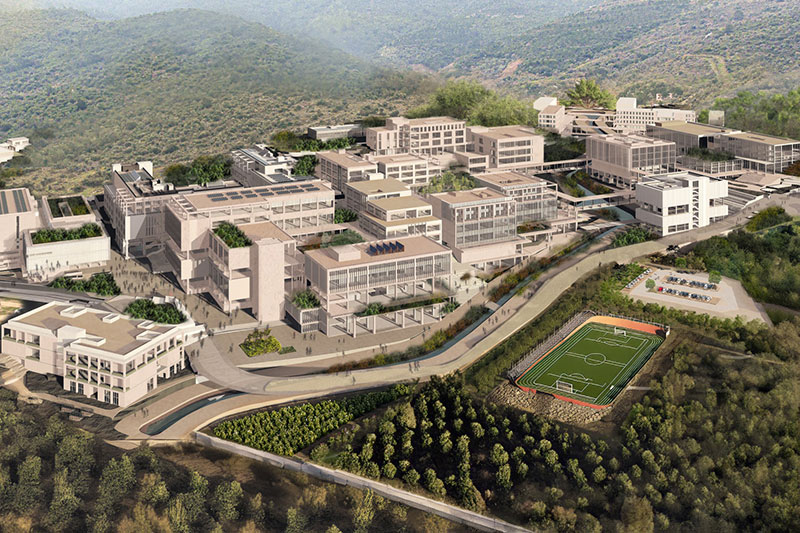
IZMIR UNIVERSITY OF ECONOMICS GÜZELBAHÇE CAMPUS
DetailsGLOBAL CAREER
As Izmir University of Economics transforms into a world-class university, it also raises successful young people with global competence.
More..CONTRIBUTION TO SCIENCE
Izmir University of Economics produces qualified knowledge and competent technologies.
More..VALUING PEOPLE
Izmir University of Economics sees producing social benefit as its reason for existence.
More..
You are one step ahead with your graduate education at Izmir University of Economics.